Fiesta 2026 — UET's Annual Sports Week and My Badminton Win
UET Faisalabad's annual sports gala Fiesta 2026 brought a week of competition across every sport — and I walked away as the first badminton winner from Computer Engineering.
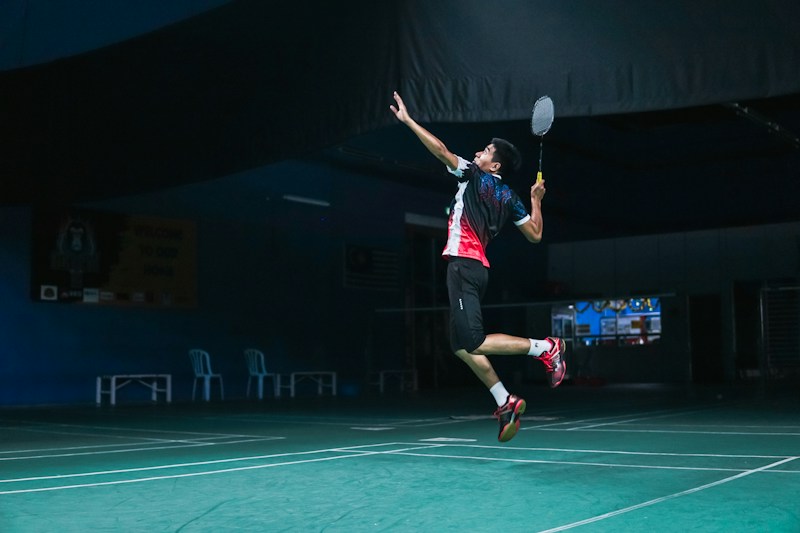
Engineering students are not supposed to be athletes. That is the stereotype, anyway — that the people who spend their days debugging code and designing schemas are not the same people you will find competing seriously on a court or a field. Fiesta 2026, UET Faisalabad’s annual sports gala, existed as a direct argument against that idea. For one full week, the university became something other than an academic institution. The labs emptied. The courts filled. Students who had spent the semester proving themselves in classrooms and exhibitions had the opportunity to prove themselves in a completely different arena — one where the only thing that mattered was what happened on the court, in real time, with no second attempts and no partial credit.
Fiesta is not a casual event. It is UET Faisalabad’s official annual sports week — a structured, department-versus-department competition across a wide range of sports, with students from every program turning out to compete and to support their departments. The scale of it is something that photographs do not fully capture. The grounds were busy from morning until the light faded. Cricket matches ran on one side of campus while football drew its own crowd on the other. Volleyball, basketball, table tennis, and badminton each had their own venues, their own brackets, their own noise. Walking through the campus during Fiesta week, you encountered a version of university life that the academic calendar rarely produces — louder, more physical, more immediate, and in its own way more honest about what competition actually feels like when it is not mediated by a grading rubric.
I had been looking forward to Fiesta since I first heard about it at the beginning of the year. Badminton is not a sport I picked up casually. I have played it long enough to understand what it actually demands — and what it demands is more than most people who have not played it seriously tend to assume. The shuttlecock moves fast, faster than it looks from the sideline, and the court is just large enough that every point requires you to cover ground quickly while maintaining the precision to place your shots where you intend them to go rather than where momentum is taking you. Speed without control loses points. Control without speed gives your opponent time to reset and attack. The game rewards the combination — the ability to move fast and still think clearly about where the shuttle needs to go.
When Fiesta began and the badminton bracket was set, I knew the competition would be serious. UET Faisalabad draws students from across Punjab, and the ones who play sports tend to play them well. The early rounds confirmed that. The opponents I faced were not there to participate — they were there to win, and they had the game to back it up. Each match required full concentration from the first point. There was no settling in, no easing into the rhythm of the competition. The level was high enough that any lapse in focus or any drop in intensity showed up immediately in the score.
The matches moved through their rounds across the week. Each opponent brought something different — different pace, different shot selection, different tactical approach. Some players were aggressive from the start, trying to take control of the rally early and force errors through pressure. Others were more patient, content to extend rallies and wait for an opening rather than creating one. Reading what each opponent was doing and making the right adjustments — changing the tempo when it was working against me, varying the placement to keep them guessing, staying disciplined when the score was close and the temptation to force things was strongest — was the actual work of each match. It was not always comfortable. There were points in several matches where the outcome felt genuinely uncertain, and uncertainty on a badminton court has to be managed rather than eliminated, because it never fully disappears until the final point is played.
I won the competition. And with that win came something I had not fully anticipated when I entered: I became the first student from the Computer Engineering department to win the badminton event at Fiesta. The first. That word carries a weight that a straightforward personal win does not. Records of this kind belong to everyone in the department in a way that individual achievements do not — the first time Computer Engineering’s name appeared on the badminton winner’s list happened in this competition, in this sports week, through this particular sequence of matches. It will remain the first until someone from the same department wins it again, and there is something genuinely satisfying about being the person who set that precedent rather than followed it.
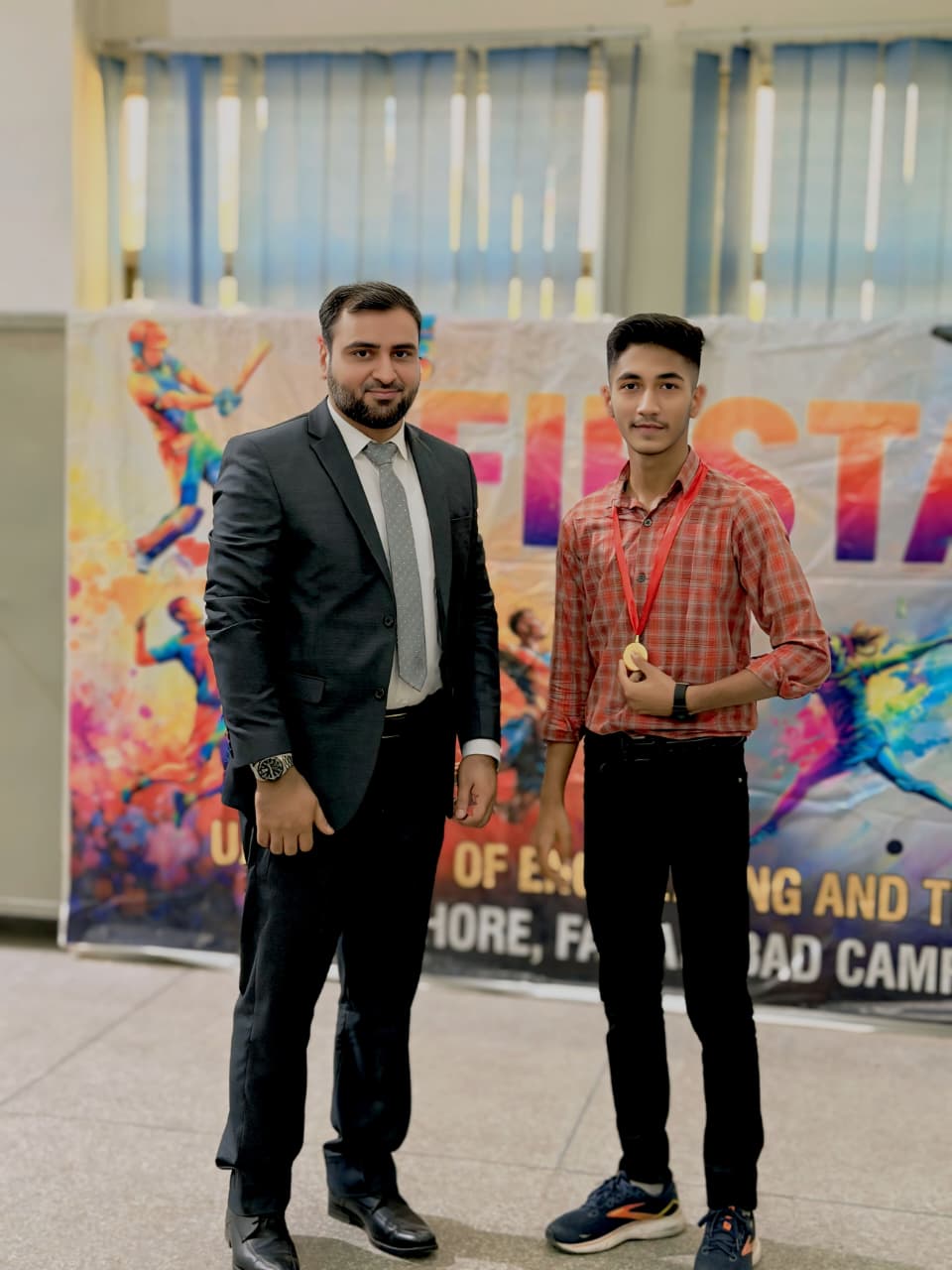
The medal ceremony had its own quality. Standing there with the award, representing a department that had not previously produced a badminton winner at this event, felt like a completion of something — not just the week’s competition, but the argument that the version of a Computer Engineering student who competes seriously in sport and the version who builds machine learning systems and designs databases are the same person. They have always been the same person. Fiesta just made that visible in a different way than the semester’s coursework had.
The broader week of Fiesta was everything a university sports gala should be. Watching the cricket final with a crowd that had been building energy all week. The noise around the football pitch during a closely contested match. The focused silence around the table tennis tables that broke into noise with every decisive point. The atmosphere across different venues created a version of university life that no single day of classes produces — a shared experience that cut across departments and years and the usual social boundaries of a university campus. Students who knew each other only by sight from different programs found themselves cheering for the same team or competing against each other on adjacent courts. That kind of mixing, produced by a shared event rather than a shared assignment, builds something between people that the academic calendar cannot replicate.
Coming back from Fiesta with the badminton winner’s award, as the first from Computer Engineering to do it, was one of the better moments of this academic year. Not because it changes anything about the degree or the coursework or the technical skills being built across the semesters. But because it was a reminder that a university experience worth having is wider than any single dimension of it — that the same qualities that carry you through a difficult semester also carry you through a difficult match, and that proving what you are capable of takes more than one form.
The labs are open again. The courts are quiet. Fiesta 2026 is done. The result stands.
First badminton winner from Computer Engineering at UET Faisalabad’s Fiesta 2026 — representing BS Computer Engineering, Spring 2026.