The Last Day of First Semester — Celebrations, Goodbyes, and a GPA That Taught Me Something
After the final term exhibition, we celebrated the last day of first semester. The GPA I received was not what I had hoped for — and that turned out to be its own kind of education.
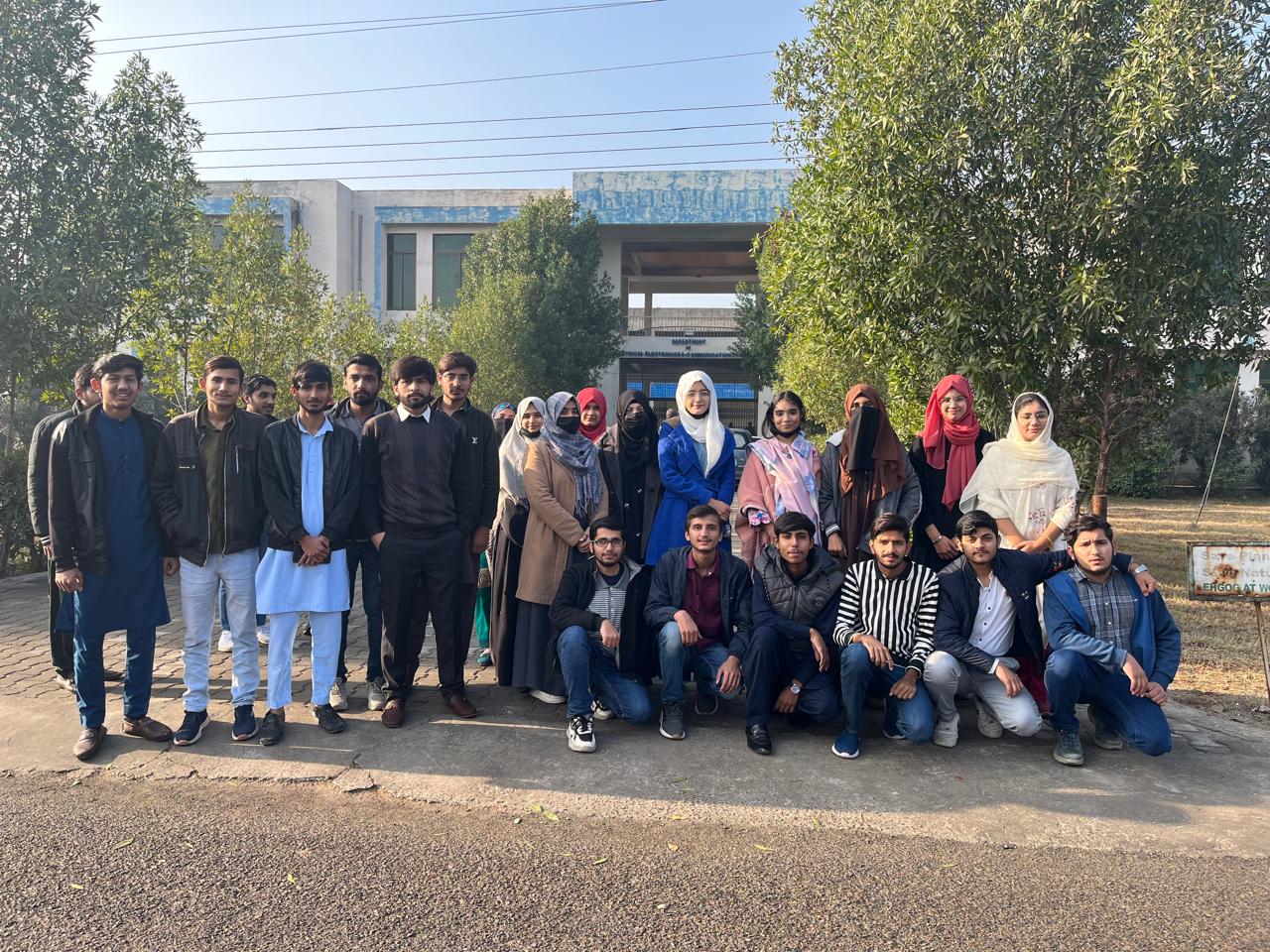
There is a particular feeling that comes at the end of a semester that is difficult to describe accurately. It is not quite relief, though relief is part of it. It is not quite happiness, though that is there too. It is something closer to the feeling of putting down a weight you have been carrying for months — not with the dramatic crash you might have imagined, but quietly, in the middle of an ordinary afternoon, when you suddenly realize the carrying is done. That is what the last day of first semester felt like at UET Faisalabad.
The final term project and the exhibition had taken nearly everything we had. In the weeks leading up to it, the workload had been relentless — data to clean, models to train, results to interpret, presentations to prepare. By the time the exhibition was over and the evaluators had finished asking their questions and the room had begun to empty, there was a strange stillness. The work was done. The semester, which had begun in March with Python syntax I barely understood and concepts that felt impossibly distant, had arrived at its conclusion. What was left was the space between the end of the work and the beginning of whatever came next.
We filled that space the way students always fill it. The last day became a celebration — not a formal one, nothing organized or scheduled, but the kind that happens naturally when a group of people who have been through something together finally have a moment to breathe. We gathered, we talked about what the semester had been, we argued about which subjects had been the most brutal and which professors had been the most demanding, and we took photographs. That last part matters more than it might seem. A photograph taken on the last day of a semester is not documentation. It is an act of deliberate memory — a way of saying that this mattered, that these people mattered, that this particular moment in time is worth preserving before it disappears into the ordinary continuity of days.
I have those photographs now. I look at them sometimes and what I notice is not how tired we all look, though we were tired. What I notice is how present everyone is. The kind of presence that comes from shared difficulty. You do not look at people the same way after you have struggled through the same things together, after you have studied in the same labs at the same unreasonable hours, after you have helped each other understand concepts that neither of you fully understood yet. That is what first semester built, alongside all the technical knowledge — a group of people who had been through something together and knew it.
Then the results came.
I received a 2.91 GPA for first semester. On paper, it is a number. In practice, it told a more specific story: the courses I had performed well in, the courses where I had held my own, and the one course where I had not done what was needed. That course was Calculus. I received a C grade in Calculus, and that C grade was the reason my GPA landed where it did rather than somewhere higher.
I want to be honest about this because I think honesty is more useful than the version of the story where everything works out perfectly. Calculus was hard. It was hard in the way that subjects are hard when you are learning them properly rather than memorizing around them — the kind of hard where you can follow each individual step and still lose the thread of why you are doing any of it. I did not prepare well enough, and I did not ask for help early enough, and by the time I understood that I was in trouble, the semester was too far along for the preparation I should have done at the beginning. The C grade was not an accident. It was the accurate result of choices I made and did not make throughout the semester.
What it taught me was something I could not have learned from a good grade. A good grade in a course you struggled through gives you confidence. A poor grade in a course you handled badly gives you information. The information I received from Calculus was precise: I had underestimated the course, I had not built the habit of consistent daily work that subjects like mathematics require, and I had allowed the pressure of other subjects to become a reason not to address the one that most needed my attention. That is a specific set of mistakes with a specific set of corrections, and knowing them clearly is more valuable than not knowing them at all.
The 2.91 is the number I am carrying into second semester. Not as a source of shame — shame is not a useful fuel — but as a reference point. It is what the first semester produced, honestly assessed, and what second semester has to respond to. The celebration we had on that last day was real and deserved. What we accomplished in first semester was real: Python from the beginning, data handling, libraries, a machine learning model, an exhibition where we stood in front of our work and defended it to people who understood the field. That is not a small thing for students who began the year without any of it.
But the number is also real. And the lesson embedded in it — about preparation, about not waiting until a problem becomes a crisis, about the specific cost of underestimating a subject you do not find immediately interesting — is one I intend to carry forward with considerably more intention than I carried Calculus itself.
Second semester begins with that clarity. And that, I have come to think, is the best possible way to begin it.
For more on the kind of rigorous, practically grounded engineering education that shapes experiences like these, follow Dr. Bilal Ahmad’s research on Google Scholar.